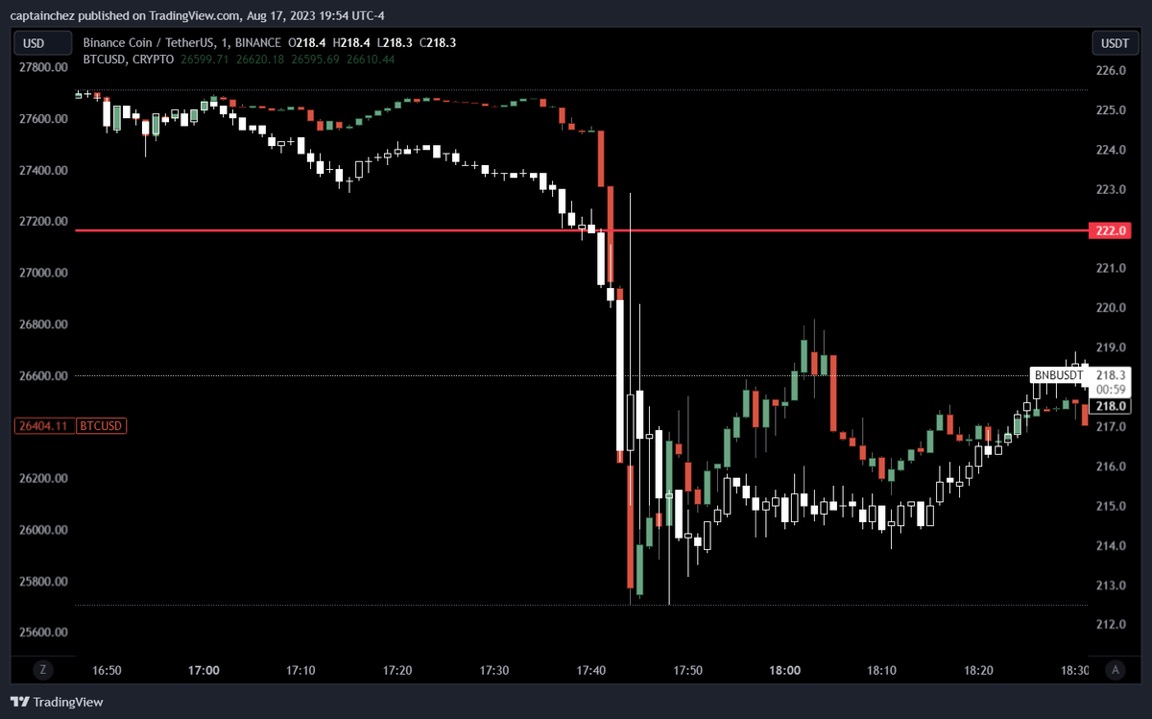
When sell-offs and cascading liquidations of leveraged positions occur, the system reveals that debt which generates money (and more debt) is unsustainable.
Bitcoin was born to break that, but the fact that it hit $70,000 in ~10 years answers to the exact opposite.
We have Monero, and it is like Criptonautas (only of interest to 1/3% of the world; the rest still choose the majority’s game).
And as we all know, anything without investment funds behind it requires 10 times more effort.
Tether was born from Bitfinex, an exchange that initially replicated stolen source code and was complicit in several scams:
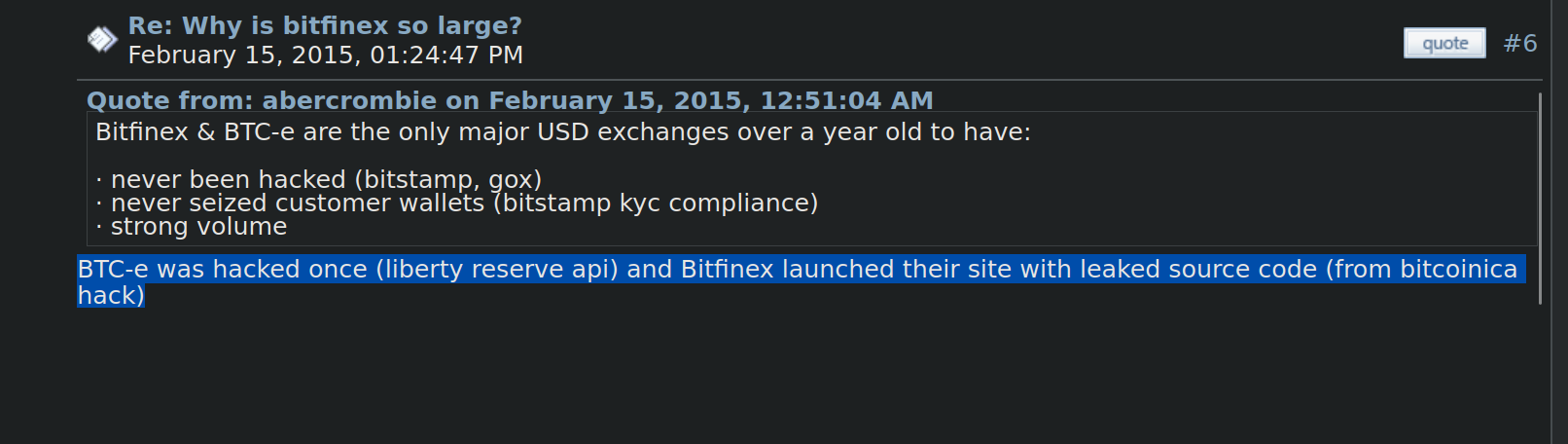
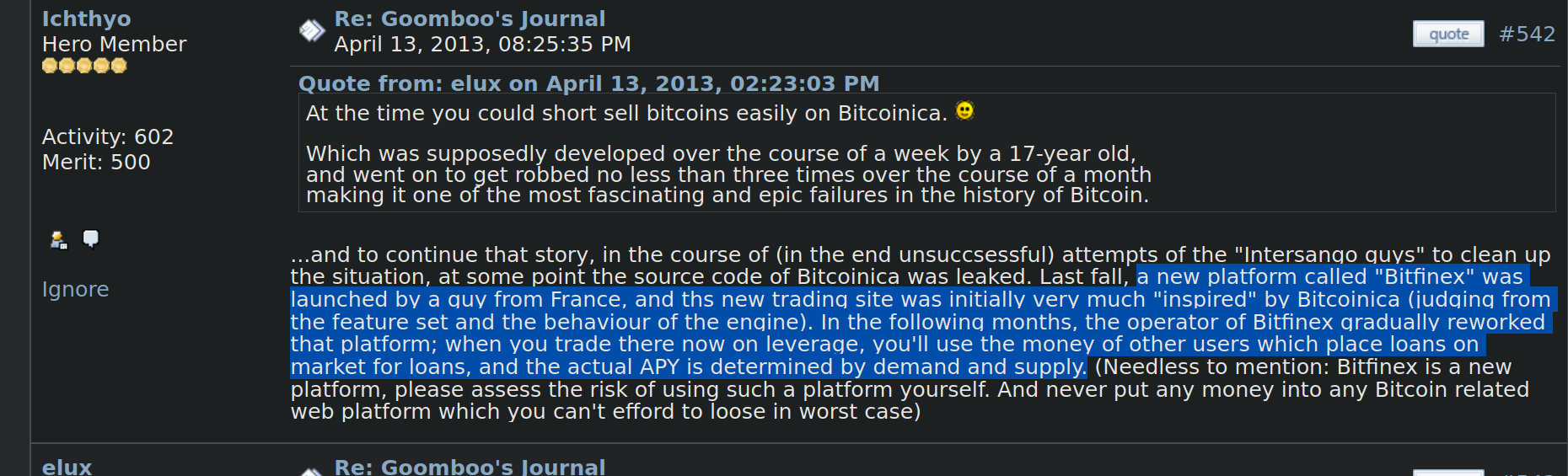
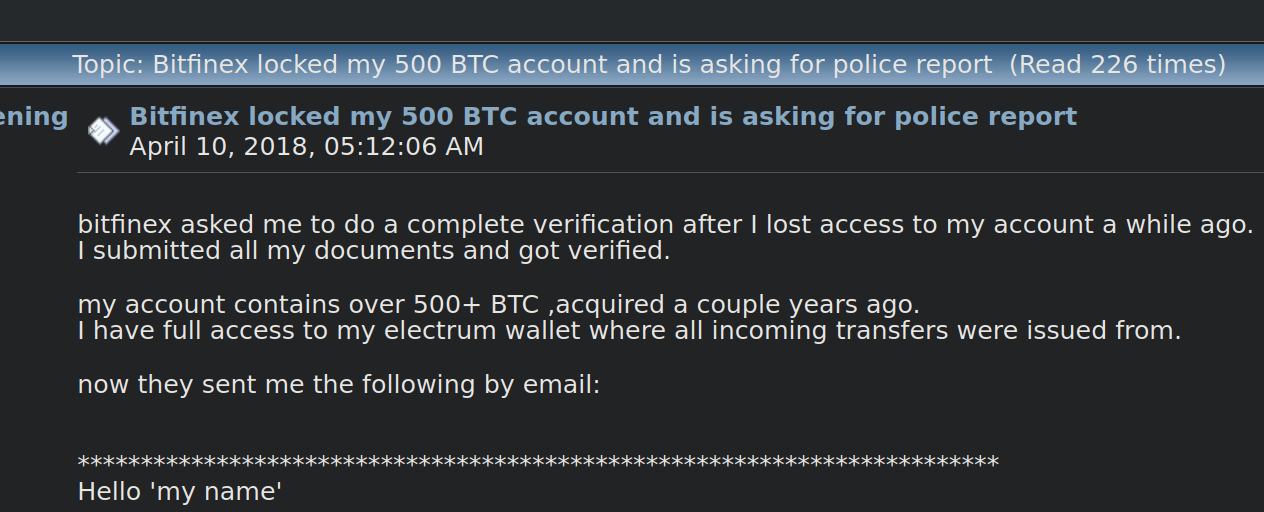
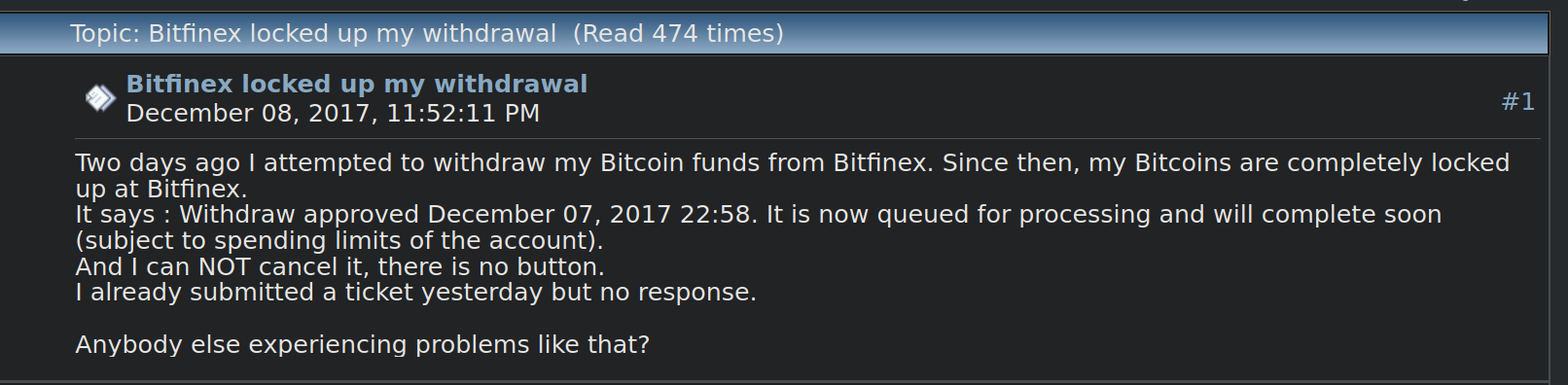
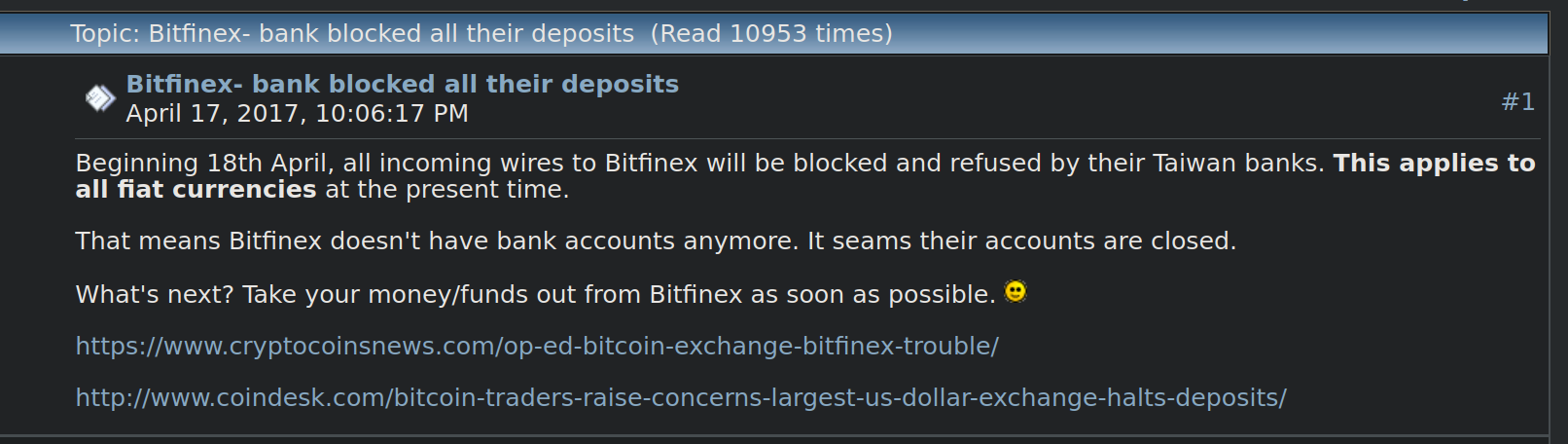
This does not “motivate” new investors to enter, which is why you will never read about it from Bitcoin maximalists.
It would be like acknowledging that a Ponzi scheme can disappear, but with the libertarian flag and “Bitcoin will save you from inflation” behind it.
When trading, I don’t care what you do with your dough. And I don’t need anyone to join anything.
They were judged for obtaining accounts with fake documents, and they delayed their reserve balance audits for years (being banned in NY and paying a “table-top” fine of ~$100M).
Tether was never a reliable company:
https://criptonautas.co/tether
What does Tether do?
It takes on debt, takes out loans, buys USDT, and then exchanges them for dollars, generating USDTs out of thin air to inject into Bitcoin.
The company keeps part of its funds in Bitcoin and in that way benefits twice, because its reserves increase while its users use USDT for everything (instead of BTC in custody).
In the breakdown of Tether’s balance sheet, we find that it has 85% of reserves in commercial paper:
https://downloads.coindesk.com/legal/C2%20Attachment%20B.pdf
And here you can see the amount of paper that depends on firms in China:
https://downloads.coindesk.com/legal/E%20BFX-THR_NYAG1304140_native.pdf
I will later publish a chart that I cannot find with its breakdown; practically EVERYTHING is in China.
Diversifying is healthy (even for institutions)
And for that reason, we know very well that having so much exposure to a country about which we know very little does not seem like a very good idea.
Retail investors are not the only ones who make terrible financial decisions.
FOMO, ambition, excess of power, and zero transparency make companies like Tether fall into the same game (along with banks and large corporations all over the world).
The system is designed so that such debt and the interest between them remain relatively stable.
And that goes great when everything is bullish…
But when stability fluctuates, companies go bankrupt, investment funds pull out, and retail investors are left without a penny, because they are the ones who ultimately pay all the debts.
Evergrande is in bankruptcy
And that means that practically everything in China, and all the commercial paper, can be worth zero.
China manages its economy in isolation. It does not count on the support of the USA, Russia, Europe, or any other (authoritarian) “power” to move forward if its system collapses.
The point is that if they fall, everyone else falls. And the same applies to countries that depend on the dollar, which are the ones that pay the consequences first.
China’s Evergrande Group is the second-largest real estate developer in China by sales.
It is incorporated in the Cayman Islands, a British Overseas Territory, and has its headquarters in the Houhai Financial Center, in the Nanshan district, Shenzhen, Guangdong province, China.
Real Estate is a market similar to that of bonds and stocks. It only works as long as “they keep buying.” When they stop buying, the system collapses.
That is how capitalism is by design, but in these investment groups, the situation is accentuated because EVERYONE is leveraged with other people’s money.
If this fund collapses and then Tether collapses, the next bull-market could be chaotic for Bitcoiners. And we know that most of them (except for gold -PAXG- and Monero) follow it closely.
What to do?
Get more involved than ever in your money, in your data, and in Criptonautas. Place your capital in what you consider safe and avoid by all means possible continuing to be misinformed.
Everyone will tell you to buy, but very few will tell you to sell.
https://www.cnn.com/2023/08/17/business/evergrande-files-for-bankruptcy/index.html
Perhaps you remember that we had similar news two years ago, denied by Tether, but invalidated by reality (like their false 1-to-1 backup in USD):